

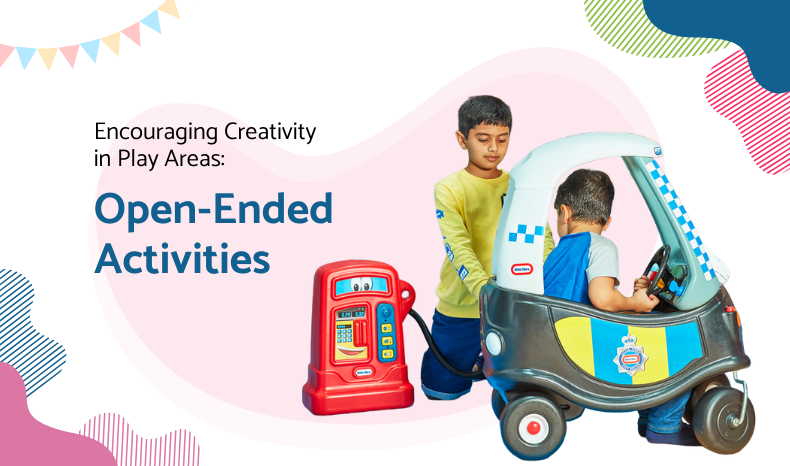
Encouraging Creativity in Play Areas: Open-Ended Activities
Ask parents around you-at school, birthday parties, or even family gatherings or any other source like whatsapp groups, and you’ll hear the same worry phrased in different ways. “They have so much energy, but nowhere to use it properly.” Between packed schedules, traffic, weather, and screen habits, free play has quietly shrunk. In this everyday reality, a good play area becomes less about entertainment and more about breathing space for children.
Parents are noticing that the size of a kid's play area isn't as important as observing how the child interacts with the area while playing. Is there a rush from activity to activity or does the child settle into the play? Does the child continually ask for guidance or independently explore on their own? This is important because open-ended activities provide both. Open-ended activities have no predetermined way to be completed, and a well-designed indoor kids play area allows children to stop, experiment, change their minds, and restart, without any outside interference.
For families in Indian cities, a reliable play area for kids often becomes that one place where play feels unhurried and natural.
What Are Open-Ended Activities in a Play Area
Open-ended activities leave space for interpretation. Nothing is pre-decided. Children choose how to begin, what to build, and when they’re done. In a well-run kids play area, this might mean using the same blocks in five different ways or turning everyday props into something new each time.
Children don’t overthink play. They move with instinct. A piece of cloth becomes a flag, then a blanket, then something else entirely. A corner becomes a shop, a bus, or a quiet hiding place. When a play area allows this kind of freedom, children relax. They stop looking for approval and start trusting their own ideas. That comfort often becomes the starting point for creativity.
Difference Between Open-Ended and Structured Play
Structured play is familiar. It has steps, rules, and clear outcomes. Complete this. Match that. Open-ended play works differently. There’s no sense of “done.” In a balanced play area, both exist, but open-ended play lets children shape the experience instead of following instructions laid out for them.
Why Open-Ended Activities Matter in a Kids Play Area
Many parents notice something subtle when play isn’t controlled. Children don’t rush. They repeat activities. They talk through ideas, sometimes quietly, sometimes out loud. These moments matter more than they appear.
Boosting Creativity and Imagination
Creativity doesn’t always announce itself. Sometimes it’s a child rebuilding the same structure again and again. In a kids play area that supports open-ended activities, children get the time they need to explore possibilities. Over time, this kind of play shapes how children approach challenges and new situations.
Supporting Social and Emotional Development
Open-ended play also influences how children relate to others. They decide roles, adjust expectations, and work through small conflicts. In a shared play area, these social lessons unfold naturally, without adults stepping in to solve everything.
How a Play Area Encourages Creativity
The environment around a child quietly guides how they play. When a space feels flexible, children feel more confident exploring it.
Child-Led Exploration and Freedom of Choice
A thoughtfully designed play area doesn’t move children along a fixed path. Some jump straight into activity. Others watch first. Some return to the same activity again and again. That freedom allows children to follow their own rhythm.
Role of Environment and Flexible Play Spaces
Spaces that can change tend to invite more imagination. Open floors, movable elements, and different textures encourage children to experiment. In an indoor kids play area, flexible layouts ensure that play doesn’t feel repetitive, even for regular visitors.
Key Elements of an Indoor Kids Play Area
Some play spaces support creativity without making a show of it. Often, it comes down to a few quiet design choices.
Flexible Zones and Open Layouts
A good indoor kids play area avoids rigid routes and fixed sequences. Instead, it offers open zones, calmer corners, and areas that shift based on how children choose to use them.
Moving Parts and Open-Ended Materials
Loose parts—blocks, fabrics, props, and art supplies—allow play to unfold differently each time. In a thoughtfully planned play area for kids, these materials don’t push children toward one outcome. They simply invite exploration.
Examples of Open-Ended Activities in a Play Area
Open-ended activities often blend so seamlessly into play that children don’t label them at all.
Pretend Play and Role Play
Dress-up corners, pretend kitchens, or small role-play setups help children explore everyday life. In a kids play area, this kind of play builds confidence gradually, through repetition and interaction.
Building, Art, and Creative Play
Blocks, clay, drawing tools, and craft spaces allow children to create without comparison. These open-ended activities let problem-solving happen quietly, without being pointed out or assessed.
Role of Facilitators and Parents
Adults still influence open-ended play, but often by doing less, not more.
Guiding Play Without Fixed Outcomes
In a supportive play area, facilitators observe first. When they step in, it’s usually with a gentle prompt or question. The aim is to support play without steering it in a particular direction.
Choosing the Right Play Area for Kids
Parents choosing a play area for kids often understand the space best by watching children inside it. Places where children linger, return to activities, and play without constant instruction tend to support creativity more naturally.
Encouraging Creativity Starts at the Right Play Area
Creativity grows when children feel comfortable and unjudged. A well-considered play area becomes more than a place to expend energy—it becomes a space where ideas form at their own pace.
At places like Play ‘N’ Learn, open-ended activities are part of everyday play. Children explore and experiment in ways that feel natural rather than directed.
Open-Ended Play Experiences at Play ‘N’ Learn
For parents looking for an indoor kids play area that balances enjoyment with meaningful play, choosing a space that values creativity can make a noticeable difference.
Across Play ‘N’ Learn, open-ended play is thoughtfully built into everyday activities, without making it feel instructional or rigid. The idea is simple: give children the right environment, materials, and gentle support so play can unfold naturally.
Some of the open-ended play experiences commonly available include:
Sensory Play Zones
Sensory areas allow children to touch, explore textures, and engage their senses at their own pace. Whether it’s feeling different materials or experimenting with movement, these zones help children self-regulate and stay engaged without instructions. In an indoor kids play area, sensory play is especially valuable for younger children who learn best through hands-on exploration. At Play ‘N’ Learn, we have Billy’s Organic Seed Pit & Carly Coder’s Giant Ball Pool that offers sensory based play experiences.
Role Play
Role-play setups encourage children to act out everyday situations in their own way. There are no scripts to follow and no “correct” roles. In a kids play area, this kind of pretend play helps children understand emotions, social cues, and everyday routines while letting imagination take the lead. At Play ‘N’ Learn, we have Role Play Town that allows kids to act out various roles in make believe scenarios.
What makes these experiences effective is not just the equipment, but the way children are allowed to engage with it. Activities remain flexible, child-led, and adaptable—key ingredients of meaningful open-ended play.
By offering a mix of sensory, creative, physical, and imaginative experiences, Play ‘N’ Learn ensures that every visit to the play area feels familiar yet new, structured yet free—exactly the balance many parents look for today.


