

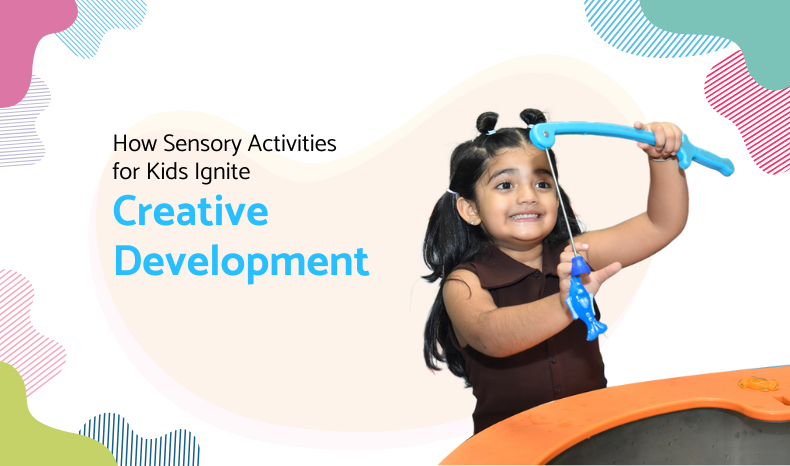
How Sensory Activities for Kids Ignite Creative Development
If you’ve been following early-childhood trends over the past few years — especially in 2025 — one thing has become loud and clear: kids learn best when their hands, minds, and senses are fully engaged. Not by simply sitting and watching, but by touching, listening, moving, smelling, splashing, squishing, shaking, and experimenting.
That’s exactly why sensory activities for kids are no passing trend. They’re actually one of the most natural ways children understand the world around them.
Think about the last time you watched a toddler completely captivated by a tray of rice or giggling as they squeezed foam between their fingers. Sure, it looks like play (and it absolutely is), but underneath that fun is some serious brain building. Every time a child engages in sensory play, they’re strengthening neural pathways that support language, problem-solving, emotional regulation — even early math and reading.
Those squishy, splashy, noisy, sticky moments? They’re doing far more heavy lifting than most grown-ups realize.
And if you want your child to experience all these benefits without the stress of prepping everything at home, places like Play ‘N' Learn make it ridiculously easy. Their curated sensory activities for kids are guided, safe, development-driven, and designed to spark genuine curiosity.
What Exactly is Sensory Play?
Let’s keep it simple: sensory play is any experience where children explore using their senses — touch, sight, hearing, smell, taste, and even movement and balance.
A classic sensory setup invites kids to scoop, pour, stack, squish, swirl, shake, or discover something new. A single sensory activity for toddlers usually taps multiple senses at once — which is exactly why it’s so effective.
Kids between ages 1 and 4 are in a major brain-development sprint. Every time they explore textures, chase light patterns, listen to different sounds, or balance across cushions, their brain is laying new connections. Those early pathways later support reading, following instructions, and logical thinking.
So if your toddler is endlessly pouring rice from one cup to another, don’t worry — they’re not “just playing.” They’re practicing essential skills.
What Sensory Play Really Does (The Benefits Parents Actually Care About)
Before we get into activity ideas, here’s a quick snapshot of why sensory play for toddlers is such a big deal:
-
Cognitive development: Understanding cause-and-effect, comparing sizes, sorting shapes — it’s early science without the lab coat.
-
Language building: Sensory play naturally introduces words like “squishy,” “cold,” “rough,” “smooth,” and “sticky.”
-
Motor skills: Scooping rice, kneading dough, pouring water — all build hand strength and coordination.
-
Emotional regulation: Repetitive motions like stirring, squeezing, or swirling help soothe big feelings.
These benefits should be kept in mind when planning sensory activities for preschoolers who crave hands-on exploration.
Ten Easy Sensory Activities You Can Try Right Now
No complicated setup. No expensive materials. Just simple, joyful, toddler-approved ideas.
1) Rainbow Rice Bin
What you need: Rice, food colour, ziplock bags, a bin, cups/scoops
Why it works: Great for colour recognition, focus, and fine motor control.
Try asking: “Can you fill this cup?” or “Which colour feels softest?”
2) Scented Cloud Dough
What you need: Flour, oil, a drop of vanilla or lavender
Why it works: Sensory-rich textures + natural smell vocabulary.
Try asking: “What does that smell remind you of?”
3) Frozen Ocean Rescue
What you need: Small sea animals, coloured water, freezer containers
Why it works: Early science, observation, and gentle motor practice using droppers.
Try asking: “What happens when warm water touches the ice?”
4) DIY Musical Shakers
What you need: Bottles + rice/pasta/beans
Why it works: Rhythm, sound exploration, loud/soft awareness.
Try asking: “Can you shake it slowly? Now fast?”
5) Texture Treasure Hunt
What you need: Leaves, foil, cotton, sponge, fabric pieces
Why it works: Helps kids identify textures and learn descriptive words.
Try asking: “Find something fuzzy!”
6) Edible Finger Paint
What you need: Yogurt + food colouring
Why it works: A safe, taste-friendly way to explore colours and movement.
Try asking: “What happens when we mix blue and yellow?”
7) Bubble Foam Tub
What you need: Soap, water, whisk
Why it works: Pure tactile fun + sensory calming.
Try asking: “Can you make a giant bubble mountain?”
8) Light & Shadow Table
What you need: LED light box or clear tub + light + translucent toys
Why it works: Visual discovery, shape exploration, early science.
Try asking: “What shape do you see on the wall?”
9) Taste-Safe Sensory Soup
What you need: Water, fruit slices, edible flowers
Why it works: Smell, taste, scooping — full sensory immersion.
Try asking: “How does it smell now?”
10) Balance Beam Walk
What you need: Tape, cushions, floor planks
Why it works: Gross motor development + body awareness.
Try asking: “Can you walk the whole line without stepping off?”
These simple setups are perfect if you’re exploring sensory activities for toddlers at home — small effort, huge developmental payoff.
Why the Right Setup Transforms Learning — Play ‘N' Learn’s Sensory Stations
Home setups are wonderful, but there’s something special about a curated sensory environment built by experts. Play ‘N' Learn has designed entire zones specifically for sensory activities for kids, including:
Sally’s WaterLab – Splashing, Pouring & Early Science
Water has a magical pull on children. At the WaterLab, little ones scoop, swirl, pour, and experiment with the flow of water. What feels like simple fun is actually building early coordination, fine motor skills, and curiosity. It’s one of those sensory activities for preschoolers that works beautifully across ages — especially as a calming sensory activity for toddlers.
Billy’s Organic Seed Pit – A Grounding, Tactile Escape
This pit filled with organic seed-like material is a toddler favourite. Kids dig, pour, bury, and explore textures with complete freedom. It’s soothing, sensory-rich, and incredibly grounding — perfect for younger children who benefit from hands-on sensory play for toddlers that helps regulate big emotions.
Giant Ball Pool – A Full-Body Sensory Workout
The moment kids step into the ball pool, they get full-body sensory input that strengthens balance and body awareness. Wading through hundreds of balls builds core strength and provides deep pressure that many children find calming. It’s also one of the most joyful sensory activities for kids, no matter the age.
Carly Coder’s Toddler Zone – Safe Exploration for Little Ones
Soft mats, gentle textures, small climbers, and sensory boards make this zone a great fit for little explorers. It’s especially helpful for parents searching for structured sensory activities for toddlers in a safe space where crawling, climbing, and touching is encouraged.
These experiences blend fun with developmental depth, guided by trained fun buddies who know exactly how to engage toddlers meaningfully.
How To Choose The Right Sensory Environment
If you’re enrolling in a centre or class, look for:
-
Fun buddies trained in child development
-
Taste-safe materials for younger kids
-
Strong hygiene and sanitisation routines
-
A mix of guided sessions and free exploration
A good sensory space balances structure with freedom — giving kids room to explore while staying safe and supported.
Here’s the truth: sensory play isn’t just entertainment. It’s foundational learning disguised as fun. Whether you're trying sensory activities for kids at home, setting up sensory play for toddlers in a classroom, or signing up for a guided sensory activity for toddlers at a professional centre — every scoop, swirl, squeeze, and splash is shaping your child’s brain.


